|
 |
| Post-Storm Electrical Safety for Agricultural Workers
|
|
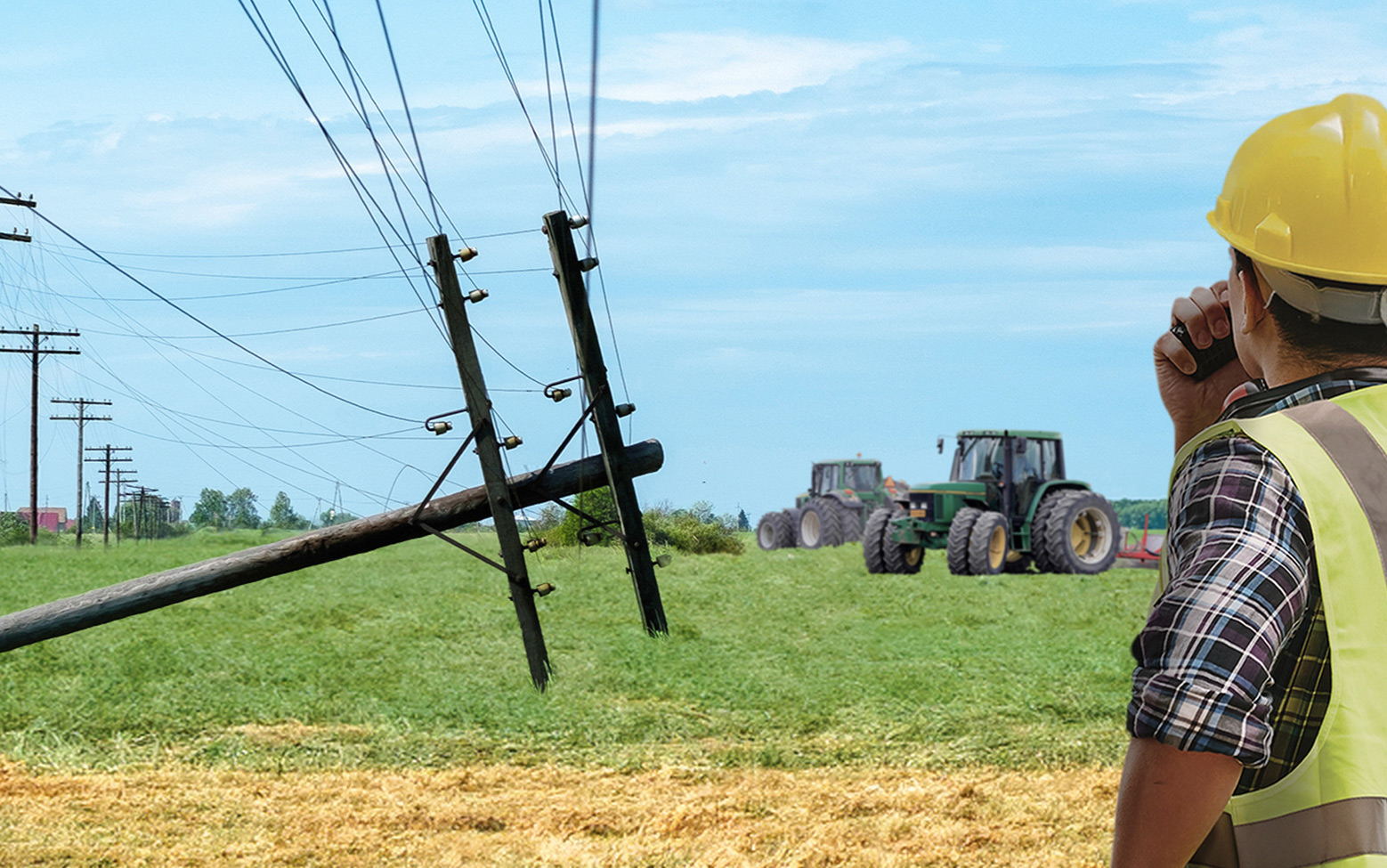
| Severe storms can leave behind more than visible damage—they often create hidden electrical hazards that put agricultural workers at serious risk. High winds or ice can snap tree limbs, topple utility poles and bring down power lines, while floodwaters can damage or energize common farm equipment. Knowing these risks and following safety protocols is key to preventing electrical shocks, fires and other life-threatening incidents. |
Get your complimentary worker
safety kit on the PG&E
e-SMARTworkers
website. |
|
|
|
|
| Don’t assume you’re protected |
| Your farming boots and other standard personal protective equipment will not protect you from electrical shock. They guard against physical hazards, not electricity. To reduce electrical risks after storms: |
| • |
Contact PG&E immediately at 1-800-743-5000 to report any downed lines. |
|
| • |
Stay at least 30 feet away from downed power lines and anything they touch. |
|
| • |
Do not touch electrical appliances or equipment if you are wet or standing in water. |
|
|
| • |
Keep a safe distance from snow piles and floodwaters, such as flooded fields and irrigation ditches. They may hide downed power lines or energized objects. |
|
| • |
Wait for snow/ice to melt and water to recede before cleaning up or resuming work. |
|
| • |
Wear protective gear rated for electrical work, such as insulated gloves and boots, when operating pumps, generators or other machines. |
|
|
| Inspect before use |
Never assume equipment is safe just because it looks dry. Ice, snow, water or even moisture can damage insulation and leave behind debris, increasing the risk of electrical shock or fire. Before using your grain dryers, pumps or any electrical equipment or tools that have been partially or fully submerged or exposed to water extensively, take these steps: |
| • |
If you must plug in or unplug equipment, shut off power at the main switch or circuit breaker first. Never plug in or unplug anything while power is still on. |
|
| • |
Let the equipment dry completely. Moisture inside components can cause dangerous malfunctions. |
|
|
|
|
|
| • |
Have a certified electrician or equipment technician inspect and test the equipment for insulation resistance and safety before restarting operations. |
|
|
| Prioritize safety with your crew to prevent hidden water damage from causing electrical shock, fire or equipment failure. Following these essential tips can help reduce the risks of electrical accidents and keep workers safe on the job. |
| Want to know more? |
| Additional utility safety tips, case studies, instructional videos and educational tools can all be found, at no charge to you, on PG&E's
e‑SMARTworkers website. |
|